
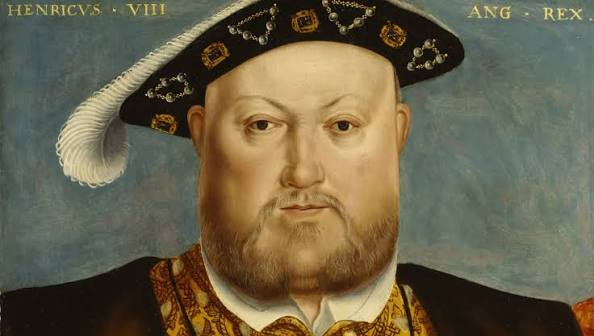
Henry through Thomas Cromwell continued his attack on the church with the suppression of the monasteries (1536–39); their lands were confiscated and granted to his supporters. However, although he laid the ground for the English Reformation by the separation from Rome, he had little sympathy with Protestant dogmas. As early as 1521 a pamphlet which he had written against Lutheranism had won him the title of Fidei Defensor from the Pope, and Henry’s own religious views are quite clearly expressed in the Statute of Six Articles in 1539 which instituted the orthodox Catholic tenets as necessary conditions for Christian belief. As a result Protestants were being burnt for heresy even while Catholics were being executed for refusing to take the oath of supremacy.
Anne Boleyn was beheaded in 1536, ostensibly for adultery. Henry’s third wife, Jane Seymour, died in 1537. He married Anne of Cleves in 1540 in pursuance of Thomas Cromwell’s policy of allying with the German Protestants, but rapidly abandoned this policy, divorced Anne, and beheaded Cromwell. His fifth wife, Catherine Howard, was beheaded in 1542, and the following year he married Catherine Parr, who survived him. Henry ended his reign with the reputation of a tyrant, despite the promise of his earlier years – in 1536 the rebellion known as the Pilgrimage of Grace was viciously suppressed, and advisers of the calibre of More and Bishop John Fisher had died rather than sacrifice their own principles to Henry’s will. But the power of the crown had been considerably strengthened by Henry’s ecclesiastical policy, and the monastic confiscations gave impetus to the rise of a new nobility which was to become influential in succeeding reigns.